


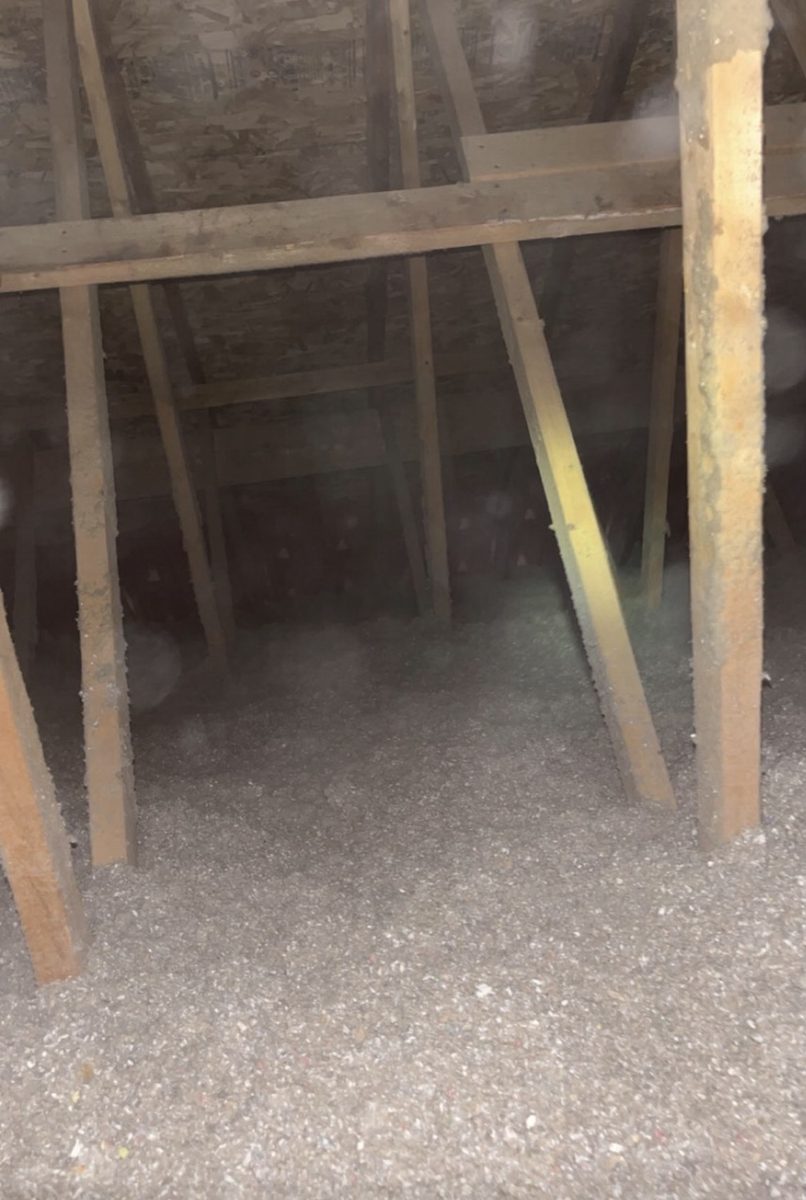
Icicles hanging off your roof are heat you paid for escaping through the attic. That heat melts the snow on your roof; the meltwater runs down and refreezes at the cold eaves. The lasting fix is air sealing, blown-in R-50 insulation and proper attic ventilation, not heating cables.
The icicle test: your roof shows you where your money is leaking
You don't need to climb into the attic to make a first diagnosis. Step outside after two or three cold days with snow on the roof, and look at your icicles. They talk.
- Small icicles here and there after a thaw or a sunny day: normal. The sun melts a bit of snow, it refreezes in the evening. Nothing to do.
- Big icicles always in the same spots, gutters packed with ice, even on cold grey days: that's not weather anymore. That's your house. Heat is leaking out of the attic at those exact spots, often above the bathroom, the attic hatch or recessed pot lights. Every one of those icicles was manufactured with heating you paid for.
- Thick stalactites at the eaves, a visible ridge of ice along the bottom of the roof, a water stain on a ceiling or at the top of a wall: active ice dam. Water is being held back on the roof and starting to work its way in. That's no longer prevention territory. Deal with it this winter, and fix the cause before the next one.
One more clue that never lies: compare with the neighbours. Same street, same storm, same cold: if your roof is melted off in patches and rimmed with ice while theirs keeps an even blanket of snow, the difference isn't outside. It's in the attic.
Why do I have icicles on my roof?
Because your roof is warm when it should be cold. In a well-insulated house, the attic air stays close to the outdoor temperature: snow sits on the roof all winter and melts quietly in spring, down the gutters.
When the insulation is thin or the ceiling leaks warm air (a poorly sealed hatch, recessed lights, the range hood exhaust, gaps around plumbing), the underside of the roof warms up. Snow melts against the shingles, the water slides down the slope… and reaches the eaves, the part that overhangs the walls with no heated house underneath to keep it warm. There, it refreezes. Ice stacks up at the edge, icicles hang from the gutters, and eventually a ridge grows tall enough to trap meltwater behind it. That standing water ends up creeping under the shingles. A roof is built to shed running water, not to hold back a pool.
The real cost isn't just the potential water damage. That heat leak runs all year: the same attic that manufactures your icicles in January inflates your heating bill all winter and overheats your bedrooms in July.
Do heating cables fix ice dams?
No. A heating cable melts channels through the ice so water can drain. It never touches the heat leak that creates the ice in the first place. It's a band-aid plugged into your hydro bill. And like every winter patch, it comes back every year, invoice included.
Let's put rough numbers on it, over 10 winters:
| Approach | Typical cost | How often | Over 10 years |
|---|---|---|---|
| Heating cables | $300–$600 to buy + $100–$200 in electricity per winter, replaced every 3–5 years | Every winter | $2,000–$4,000, and the shingles bake above the cables |
| Ice removal with an axe or pick | $150–$400 per visit | 1–3 times a winter | $1,500–$6,000, plus torn-off shingles thrown in |
| Shovelling the roof | $100–$250 per visit (or your Monday mornings and your back) | After every big snowfall | $2,000 and up, and it's one of the most accident-prone winter jobs there is |
| Fixing the attic (air sealing + R-50 + ventilation) | $1,995 before taxes for a typical attic, $495 after the grant if you qualify | Once | $0 recurring, and you heat less every winter |
Put another way: three or four winters of patches and you've already spent the price of a permanent fix, without solving anything, and while wearing down your roof in the process.
How do you prevent ice dams for good?
By making the roof cold, edge to edge. It's done in three layers, always in this order:
- Seal the air leaks. Before adding a single inch of insulation, you caulk and seal the warm-air pathways: the attic hatch frame and lid, recessed pot lights, the range hood duct, plumbing stacks, electrical wires punching through the ceiling. It's the least glamorous step and the most profitable one. Warm air jetting upward melts far more snow than heat slowly conducting through insulation ever will.
- Blow insulation up to R-50. Most Quebec homes built before the 1990s sit at R-12 to R-20, two to four times below today's target. Fiberglass or cellulose gets blown over the existing layer up to the right depth (see our R-50 vs R-60 guide and our insulation comparison, or measure yours with our R-value calculator).
- Ventilate soffits to ridge. Baffles keep the soffits clear, an exhaust at the peak lets outdoor air sweep through the attic continuously and carry away whatever heat still gets through. A ventilated attic stays cold even at -20.
A well-timed bonus: Hydro-Québec's LogisVert program requires exactly this combination, insulation plus air sealing, to pay out up to $1,500, with no pre-work energy audit. Fixing your ice dams is literally the project this rebate was designed to fund. Details and conditions are in our LogisVert 2026 guide.
Special case: cathedral ceilings or rooms with no attic above them (a converted upstairs bedroom, an addition with a sloped ceiling). There's no space to blow R-50 into. That's the scenario where spray foam becomes the right answer, because it insulates and air-seals in just a few inches.
When should you call a roofer instead of an insulation contractor?
We'll be straight with you: the attic doesn't explain everything, and we'd rather tell you before you spend. Call a roofer first if:
- your shingles are at the end of their life, curling, shedding granules, cracking when touched. Insulating under a worn-out roof fixes the cause while leaving the door open to leaks;
- there's no ice-and-water membrane at the roof edge. On newer roofs, a self-adhesive membrane protects the first 3 to 6 feet against water backed up by ice. If yours doesn't have one and the roof is due for replacement, have it installed along with the new shingles;
- water is already coming in heavily. An active leak gets patched from the roof side first; then you fix the attic so it doesn't come back.
In every other case, and that's the vast majority of icicle houses, the problem gets solved from the inside, in the attic, for a fraction of the price of a new roof.
How much does it cost to fix the problem at the source?
With us, insulating a typical attic up to R-51, air sealing included, comes to $1,995 before taxes. With the LogisVert grant (up to $1,500, paid after the work), it comes to $495 if you qualify. That's less than a few winters of roof-clearing contracts, and it works for you twelve months a year by cutting both heating and cooling.
The exact price depends on your floor area, the insulation already in place and the attic access. No need to wait for a site visit to find out: enter your address in our online calculator and get your price in 2 minutes, estimated rebate included. The icicles come back every December, the best time to fix this is before the snow.
Your icicles cost you money every winter
Enter your address, answer a few questions, and know in 2 minutes what the permanent fix costs. LogisVert rebate calculated automatically.
Get my price →