


The short answer
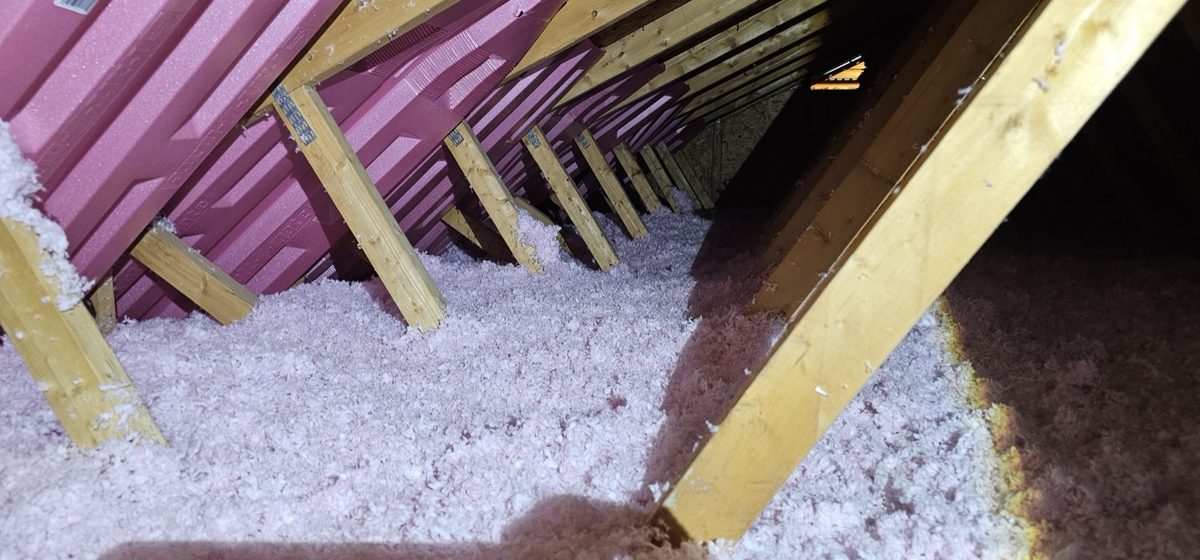
For a standard attic in Quebec, cellulose or blown-in fiberglass are the best choices: proven performance, reasonable price and grant eligibility. Spray foam (closed-cell polyurethane) is for targeted areas (rim joists, basements, flat or cathedral roofs), where its air-barrier properties justify its price.
That's the summary. But if you're comparing quotes right now, you deserve more than a three-line answer. A lot of what you'll find online about this comes from France or the southern United States, with prices and a climate that have nothing to do with ours. Here's the full comparison, written for a Quebec home: R-value, price per square foot, moisture, convection, grants, no sales pitch.
The comparison at a glance
| Criteria | Cellulose | Blown-in fiberglass | Spray foam (closed-cell) |
|---|---|---|---|
| R-value per inch | ~R-3.7 | ~R-2.5 to R-2.8 | ~R-6 |
| Typical attic price | ~$1.00 to $2.50/sq ft depending on thickness | ~$1.00 to $2.50/sq ft depending on thickness | ~$2.00 to $5.00/sq ft |
| Resistance to convection | Excellent (dense material) | Good at sufficient density | Total (rigid foam) |
| Behaviour with moisture | Absorbs then releases moisture; needs good attic ventilation | Doesn't hold water, dries fast, rot-proof | Impermeable, acts as a vapour barrier |
| Air barrier | No | No | Yes |
| Fit for a standard attic | Very good | Very good | Rarely justified |
A word on prices: these are indicative ranges for a residential attic, full installed thickness. The final price depends on the surface, access, the insulation already in place and the air-sealing work included. Comparing two quotes on $/sq ft alone, without checking the thickness actually blown, remains the best way to get burned.
Cellulose or fiberglass: which one insulates better?
Per inch, cellulose wins: about R-3.7 per inch versus R-2.5 to R-2.8 for blown-in fiberglass. In practice, that means blowing a few more inches of fiberglass to hit the same R-value. But keep this straight: at equal R-value, the two insulate exactly the same. An R-50 attic in fiberglass performs just like an R-50 attic in cellulose.
The real differences are elsewhere:
- Cellulose is denser. It blocks air movement inside the insulation itself (convection) better, a real advantage in deep cold. It also dampens sound better.
- Fiberglass is inert. It doesn't hold water, dries quickly, resists mould and doesn't attract rodents. It stays remarkably stable over decades.
- Settling. Cellulose settles over time. A serious installer knows it and blows extra thickness to compensate. Blown fiberglass settles very little.
- Moisture. Cellulose absorbs moisture then releases it; in a well-ventilated attic that's fine. If ventilation is deficient, fiberglass is more forgiving.
Honestly, both are excellent choices for a Quebec attic. The right pick depends on the condition of your attic, its ventilation and the quality of the installation, not on some universal winner.
When is spray foam worth it?
Closed-cell spray foam is the technical champion: about R-6 per inch, air barrier and vapour barrier in a single product. It's also the most expensive, and that's where marketing goes off the rails: it gets pitched for attics where it adds nothing over a blown-in insulation at half the price.
Spray foam is the right call when space is tight and airtightness is critical:
- Rim joists (the perimeter of the floor structure in the basement), a major air-leak zone that batts can't seal properly;
- Foundation walls and basements: it tolerates contact with concrete and handles moisture;
- Flat roofs and cathedral ceilings, no room for 20 inches of blown insulation, you need maximum R in minimum thickness;
- Floors above a garage or any unheated space.
And let's be clear: for a standard, accessible attic, spray foam is not necessary. Blown-in insulation, combined with proper sealing of the attic hatch, pot lights and plumbing stacks, delivers an equivalent result for much less money, and it qualifies for grants, which a full spray-foam attic rarely does. For the areas where it does make sense, see our spray foam insulation service.
How thick to reach R-50?
In Quebec, the target for an attic is R-50 (RSI 8.8), the threshold required by the LogisVert grant for the roof. Our attic installations aim for R-51. Here are the approximate thicknesses, once the insulation is in place and settled:
| Target | Cellulose | Blown-in fiberglass | Spray foam |
|---|---|---|---|
| R-50 | ~14 to 16 in | ~18 to 20 in | ~8 to 9 in |
| R-51, what we install | 15.9 in | 18 in | 8.5 in |
These thicknesses include a margin for cellulose settling. Note that spray foam reaches R-50 in half the thickness, at a cost that makes no sense in an attic where space isn't the problem. To understand what these numbers actually change on your heating bill, read our article on attic R-value: R-50 or R-60.
To find out how many inches your attic is missing, measure your insulation with our R-value calculator.
Can you blow new insulation over the old?
In most cases, yes, and that's what keeps prices reasonable. You can blow cellulose over fiberglass, or fiberglass over cellulose, with no compatibility issues. Three conditions must be met, though:
- The existing insulation is dry and sound, no trace of water infiltration or mould;
- No contamination, no significant rodent droppings or nests;
- It's not vermiculite, in a house insulated before the 1990s, vermiculite may contain asbestos and requires specific handling before adding any insulation.
If any of these conditions isn't met, the old insulation has to come out before blowing new material. It costs more, but burying wet or contaminated insulation under fresh material only hides a problem that will come back. See our insulation removal service for details.
The Quebec climate changes the math
An insulation comparison written for France or the southern US doesn't hold up here. Three realities specific to our climate weigh on the choice:
- Deep cold and convection. When it's -25 °C outside and 21 °C inside, the temperature gap creates air movement inside insulation that's installed too light, cutting its real-world performance. Adequate installed density, whatever the material, is essential.
- Condensation. Warm, humid indoor air leaking through the ceiling condenses when it reaches the cold attic. Frost builds under the roof deck, it drips at thaw, and mould follows over the years. That's why sealing air leaks matters as much as insulation thickness.
- Ice dams. A poorly insulated attic leaks heat, which melts the snow on the roof; the water refreezes at the eaves and forms a dam that pushes water back under the shingles. Insulation at R-50 or better, with proper air sealing and ventilation, is the real fix, not heating cables.
What about grants?
Cellulose and blown-in fiberglass are the go-to materials for grant programs. LogisVert (Hydro-Québec) offers up to $1,500 when roof insulation is combined with air sealing, provided the roof reaches R-50 (RSI 8.8) after the work. A full spray-foam attic, on top of costing more, rarely fits these programs. All the details and conditions are in our LogisVert grant 2026 guide.
Our honest recommendation
We install all three materials, so we have no reason to push one over another. Here's how we call it, project after project:
- Standard accessible attic: cellulose or blown-in fiberglass. Same performance at equal R, reasonable price, grants on the table. That's the vast majority of homes.
- Rim joists, basement, flat roof, cathedral ceiling: spray foam. That's where it earns every dollar.
- The winning combo: spray foam at the rim joists + blown-in insulation in the attic. You fix air leaks where they're critical and put the thickness where it costs the least.
Be wary of anyone pitching spray foam everywhere without having seen your attic: that's the sign of a salesman, not an insulator.
Which insulation for your attic?
Enter your address and get a realistic price in 2 minutes, with the right insulation for your situation, not the most profitable one for us.
Get my price →