

Vermiculite: why all the concern?
Vermiculite is a light, pourable, beige-gold granular insulation used in thousands of Quebec attics before the 1990s (often under the brand Zonolite). The problem isn't vermiculite itself, but the fact that much of what was sold back then came from a mine contaminated with asbestos.
How do I know if mine contains asbestos?
Visually, you can't tell contaminated vermiculite from safe vermiculite. The only certainty comes from laboratory sampling. The recognized rule of caution: if your attic contains vermiculite installed before 1990, it is presumed contaminated until proven otherwise.
Clues to watch for: beige-gold granular insulation (not wool or fibre), a home built or renovated before 1990, light, shiny pellets.
Is it dangerous if I don't touch it?
As long as it stays sealed and undisturbed, the risk is low. The danger appears the moment you disturb it: adding insulation on top, running electrical wires, renovating, ventilation. The asbestos fibres, invisible, can then be released and circulate through the home.
What you must NEVER do
- Vacuum or sweep the vermiculite.
- Remove it yourself without containment or protection.
- Add insulation on top without an assessment.
- Walk through the attic unnecessarily.
How safe removal works
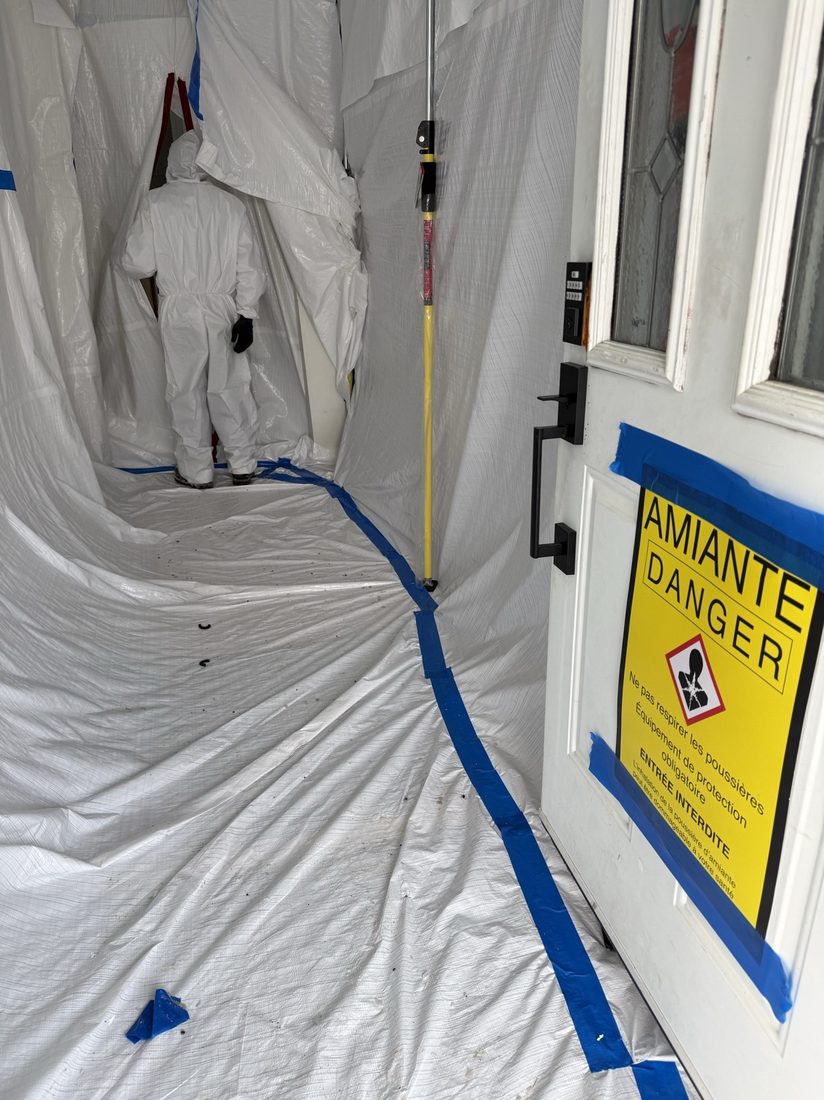
In Quebec, this work is regulated by the CNESST. Removal is done under containment, in negative pressure, with filtered (HEPA) vacuuming and compliant disposal of the materials. Once the space is sanitized, it can be re-insulated with new, safe material (R-51). Isolation à Rabais operates in compliance with RBQ, CNESST and IQAQ.
On pricing: every range (lab testing, contained removal, decontamination, re-insulation) is detailed in our 2026 decontamination and vermiculite price guide.